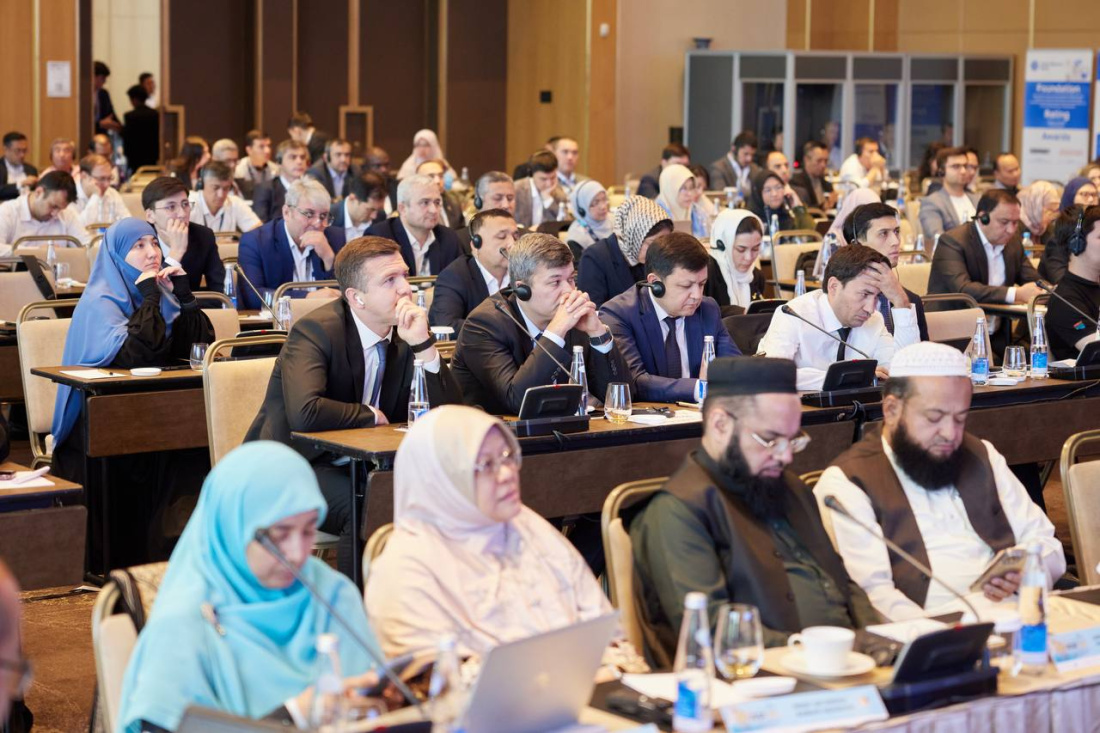
Uzbekistan hosted the 20th International Shariah Scholars Forum in Islamic Finance (ISSF 2025) under the theme “Introduction of the Islamic Banking System: Towards a Sustainable Financial System”.
The event took place at the Hyatt Regency Tashkent in the capital, bringing together leading scholars and experts in Islamic finance. The forum was organized by INCEIF University and its ISRA Institute in collaboration with Al Muamalat Consulting (Uzbekistan).
Main Objectives of the Forum
The main theme of the forum focused on the development of Islamic finance, the introduction of advanced practices into the financial system, strengthening cooperation among scholars, regulators, standard-setting organizations, and industry experts, as well as creating a platform for exchanging views on issues related to Islamic law.
Within the framework of the forum, discussions were held on the transition to an Islamic banking system, corporate governance issues in transforming banks into Islamic banks, financial products, legal and regulatory challenges, practical problems, and possible solutions.
Participants of the Forum
ISSF 2025 brings together leading scholars, experts, and practitioners from around the world. Participants include the President of the International Union of Muslim Scholars, Prof. Dr. Ali Mohyiddin Al-Qaradaghi; expert in Islamic economics and finance, Prof. Dr. Monzer Kahf; Islamic banking consultant, Dr. Muhammad Imran Usmani; as well as distinguished scholars from INCEIF and ISRA — Datuk Prof. Dr. Mohamad Akram Laldin, Prof. Dr. Aznan Hasan, Prof. Dr. Engku Rabiah Adawiah, Prof. Dr. Said Bouheraoua, Prof. Dr. Younes Soualhi, Prof. Dr. Obiyathulla Ismath Bacha, and Dr. Marjan Muhammad. In addition, the participation of international experts Dr. Nizam Yaquby and Dr. Sami Al-Suwailem (IsDB Institute) is also expected.
Signing of the Memorandum
It should be particularly noted that within the framework of the forum, a memorandum of understanding was signed between the Central Bank and INCEIF. The memorandum is aimed at cooperation in the organization of educational programs, training courses, and seminars, as well as conducting joint research in the field of Islamic finance. According to this memorandum, an agreement was reached to translate four books on Islamic finance into the Uzbek language and make them available to users.
ISSF 2025 represents an important step for Uzbekistan in the sphere of Islamic finance, contributing to the improvement of the relevant legal and regulatory framework, the development of human capital and institutional capacity, as well as the strengthening of the country’s position as a regional hub in Islamic finance.
Opening of the Forum
At the opening ceremony, speeches were delivered by the leadership of INCEIF University, the founder of Al-Muamalat Consulting, Iskandar Tursunov, and the Deputy Chairman of the Central Bank of Uzbekistan, Abrorkhoja Turdaliev. In his speech, Abrorkhoja Turdaliev emphasized the prospects of the Islamic financial system in the country.
First Day — 17 September
The first day sessions:
· Islamic Banking Models: Dr. Marjan Muhammad (Malaysia), Sheikh Dr. Muhammad Nizam Saleh Yaquby (Bahrain), Sheikh Dr. Bashir Aliyu Umar (Nigeria).
o Conclusion: the strengths and limitations of different models (Islamic bank, “subsidiary organization,” and Islamic “window”) were compared. It was emphasized that for Uzbekistan it is important to select solutions consistent with national legislation and market requirements.
· The Role of Shariah Governance: Sheikh Prof. Dr. Ali Mohyiddin Al-Qaradaghi (Qatar), Sheikh Datuk Prof. Dr. Mohamad Akram Laldin (Malaysia), Dr. Abdulbari Mashal (USA), Dr. Saeed Adekunle Mikail (Nigeria).
o Conclusion: the transparency of Islamic banking depends on the establishment of effective Shariah committees and internal control systems.
· Maqasid al-Shariah in Financial Products: Prof. Dr. Younes Soualhi (Algeria), Sheikh Prof. Dr. Aznan Hasan (Malaysia), Dr. Sami Suwailem (Saudi Arabia).
o Conclusion: financial products should serve not only profit but also social justice and the public interest.
Second Day — 18 September
The keynote address of the second day was delivered by Sheikh Prof. Dr. Ali Mohyiddin Al-Qaradaghi, President of the International Union of Muslim Scholars. He highlighted the importance of Islamic banking for sustainable finance and the global economy.
The sessions of the second day:
· Legal and Regulatory Challenges: Dr. Mazlan Hussain (Malaysia), Prof. Dr. Engku Rabiah Adawiah (Malaysia), Dr. Muataz AbuJeib (Syria).
o Conclusion: during the process of replacing conventional products with Islamic alternatives, it is necessary to ensure harmonization of legislation and alignment with global standards.
· Shariah Issues and Solutions: Sheikh Prof. Dr. Aznan Hasan (Malaysia), Mr. Alkhazur Tazbaev (Russia), Jumadi Kadir (Malaysia), Nasser Khidour (Algeria).
o Conclusion: the discussions addressed the transition to new contracts, the elimination of prohibited elements, and the integration of international experience.
· Islamic Banking and Social Finance: Dr. Muhammad al-Bashir Muhammad al-Amin (Chad), Sheikh Dr. Muhammad Nizam Saleh Yaquby (Bahrain), Joe Bradford (USA), Prof. Dr. Obiyathulla Ismath Bacha (Malaysia).
o Conclusion: opportunities were highlighted to strengthen financial inclusion and support communities through the integration of social instruments such as zakat, waqf, and sadaqah with banking products.
o
Closing of the Forum
At the closing ceremony, representatives of the Central Bank, the head of Al-Muamalat Consulting, and Prof. Dr. Said Bouheraoua (ISRA) participated. The general conclusions of the forum and its resolution were announced.
Over the course of two days of discussions, ISSF 2025 gathered in Tashkent leading scholars and experts in the field of Islamic finance. The forum became an important stage for Uzbekistan in developing human capital, improving the legal framework for Islamic finance, and introducing the Islamic banking system.