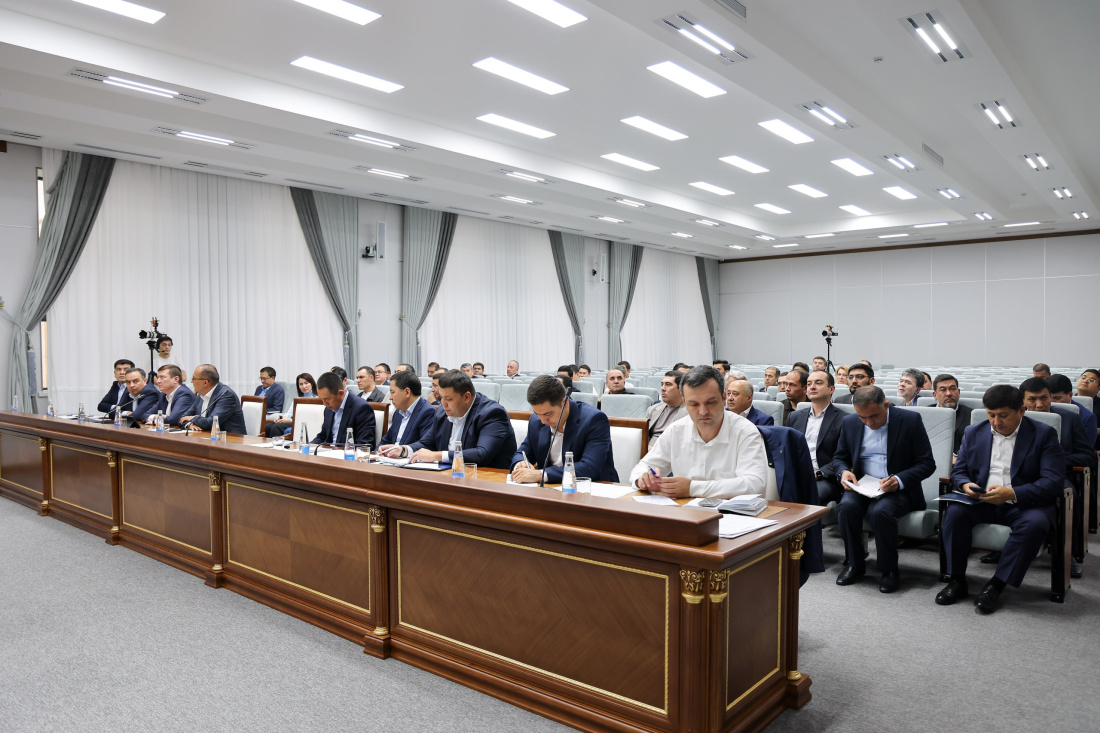
On 9 October 2026, the Central Bank of the Republic of Uzbekistan, with the participation of commercial banks and the Uzeltexsanoat Association, held an open dialogue with more than 200 entrepreneurs operating in the electrical engineering industry.
The primary purpose of the meeting was to directly examine issues faced by enterprises in accessing banking services and financing, identify practical obstacles, hear entrepreneurs’ proposals, and discuss possible solutions jointly with banks and relevant organizations.
Particular attention was given to the financial needs arising from the specific production and trade cycles of the electrical engineering industry. In particular, the participants discussed improving working capital financing mechanisms throughout the entire process, from the procurement of raw materials and production to sales in domestic and foreign markets, including exports.
Simplifying Bank Guarantee and Financing Procedures
Entrepreneurs raised issues related to the issuance of bank guarantees and extensions of their validity. It was noted that existing procedures can, in some cases, prolong the financing process.
During the dialogue, information was provided on ongoing efforts to improve procedures for extending bank guarantees and obtaining subsequent financing. The possibility of conducting the relevant review procedures in parallel with banks’ assessment of credit documentation was also discussed.
Financial Products Tailored to the Electrical Engineering Industry
Another key area of discussion was the development of banking products aligned with the production cycles of electrical engineering enterprises.
It was noted that the procurement of raw materials, including copper, the financing of production costs, domestic deliveries, and export operations require financial resources of varying maturities.
In this context, the participants discussed developing proposals for sector-specific lending and factoring mechanisms based on an assessment of enterprises’ credit histories and production chains. The need for commercial banks to formulate relevant proposals and review them jointly with industry representatives was also noted.
Financing Based on Export Contracts
The financial needs of exporting enterprises and companies supplying products under major projects were also considered separately during the open dialogue.
In particular, it was noted that, under EPC contracts, payments made a certain period after the delivery of products create an additional need for working capital.
Accordingly, the participants discussed the possibility of considering not only conventional collateral requirements when making financing decisions, but also enterprises’ existing contracts, their track record in fulfilling those contracts, financial position, payment discipline, and expected cash flows.
Views were exchanged on commercial banks piloting financing approaches based on these criteria and assessing their practical effectiveness.
International Settlements and Banking Operations
Entrepreneurs also raised certain issues arising in the course of making international payments through foreign correspondent banks.
The participants exchanged views on foreign banks’ compliance requirements, delays affecting certain transactions, and challenges faced by enterprises in cross-border settlements.
They discussed raising these issues during engagements with the relevant foreign financial institutions, preparing the necessary information and supporting materials, and providing practical assistance through available channels.
From Dialogue to Practical Solutions
The proposals presented during the open dialogue demonstrated that the financial needs of enterprises in the electrical engineering industry are closely linked to the specific characteristics of their production processes.
For this reason, in addition to considering individual requests, the discussions focused on identifying systemic issues specific to the industry and developing appropriate financial mechanisms.
Following the meeting, it was agreed to improve procedures related to bank guarantees, develop proposals for lending and factoring mechanisms for electrical engineering enterprises, examine financing approaches based on export contracts, and continue the relevant work on issues arising in international settlements.